A new wood fence looks great the day it goes in, but without protection, that fresh look doesn’t last long. For homeowners in Brockton, MA, where fences face rain, snow, humidity, and strong temperature swings, staining and sealing can make a big difference in how long a wood fence holds up. At Lopez B Services INC, we’re often asked whether this extra step is really necessary.
Here’s a breakdown of what staining and sealing actually do, and when they’re worth the investment.
What Staining and Sealing Actually Do
Staining and sealing serve two different purposes, and the best results often come from combining them.
- Stain adds color and enhances the natural grain of the wood
- Sealant creates a protective barrier against moisture
- Many products combine stain and sealer in a single application
- UV-blocking formulas slow fading and graying from sun exposure
- Treated wood still benefits from added surface protection
Wood naturally absorbs and releases moisture, which leads to warping, cracking, and rot over time. A quality finish limits that cycle and keeps the boards more stable.
The Benefits of Protecting Your Fence
When done properly, the advantages go beyond appearance.
- Longer fence lifespan with fewer premature repairs
- Reduced risk of rot, mold, and mildew
- Less splitting, warping, and board shrinkage
- A cleaner, more consistent look that boosts curb appeal
- Lower long-term maintenance costs compared to full replacement
Considering the cost of replacing a fence, protecting the one you have is often a smart way to make your original investment last.
When It Makes the Most Sense
Timing and fence condition both affect whether staining and sealing will pay off.
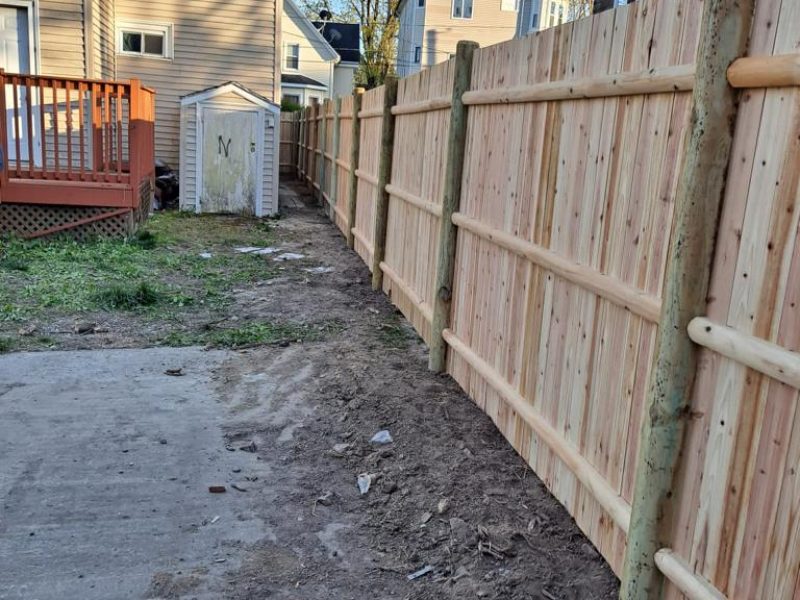
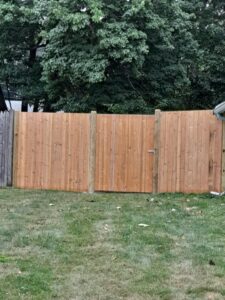
- On newly installed fences, once the wood has dried enough to absorb the product
- On older fences that are still structurally sound but looking weathered
- In areas with heavy shade, moisture, or frequent snow cover
- Before visible signs of rot or decay begin to develop
- When you want to refresh the fence’s color without replacing boards
If a fence already has widespread rot, loose posts, or major structural damage, a new coat won’t fix those problems, and replacement may be the better option.
How Often to Reapply
Staining and sealing isn’t a one-time job, so it helps to know what to expect.
- Most fences need a fresh coat every two to three years
- Fences in harsh sun or heavy moisture may need it sooner
- Fading, water no longer beading on the surface, or graying wood signal it’s time
- Cleaning the fence before reapplying improves how well the finish bonds
- Regular inspections help catch problems early
Staying on a consistent schedule keeps the protection working and avoids the larger expense of major repairs.
Final Thoughts
For most wood fences, staining and sealing is well worth the effort. It protects your investment, keeps your property looking sharp, and helps your fence stand up to New England weather year after year. If you’re not sure whether your Brockton fence needs a new finish or something more, the team at Lopez B Services INC can take a look and give you an honest recommendation.
Call us today at (774) 712-5098 to schedule your fence consultation.